

Article: Self-Emptying Robot Vacuums: What They Actually Do for Your Week

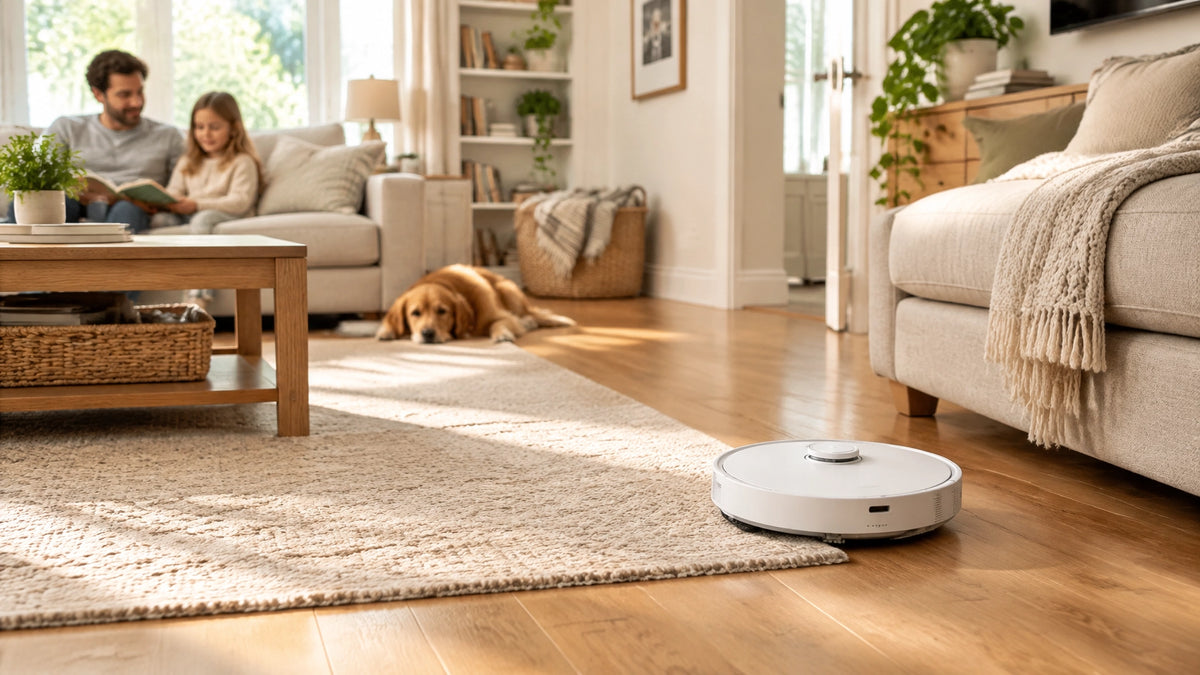
Self-Emptying Robot Vacuums: What They Actually Do for Your Week
Crumbs appear under the table again. Pet hair gathers along the hallway. And even after you’ve run the vacuum, there’s one more small task: emptying its bin. None of these jobs takes long on its own, but together they can make it feel like the floors are never really done.
A self-emptying robot vacuum takes one of those repeat tasks off your list. It won’t make every floor perfect, and it doesn’t mean you never clean. What it does is keep everyday mess in check without asking for your attention every time it runs. That’s a smaller change than the marketing suggests, and a more useful one.
What “self-emptying” actually means
A regular robot vacuum collects dust and debris in a small bin inside the machine. When that bin fills up, you take it out and empty it by hand. With a self-emptying model, the robot returns to a larger base after cleaning. The base pulls debris from the robot’s bin into a separate bag or container.
In practice, the cleaning part still happens on the floor. The extra step happens when the robot docks: the base transfers the collected debris, and the robot is ready for another run. You don’t have to empty the robot’s onboard bin after every clean.
That’s the simple idea behind a robot vacuum with self-empty base: less frequent handling, not no handling. You’ll still need to check the base and look after the robot from time to time.

What it can change over the course of a week
Imagine a regular weekday. Someone drops toast crumbs at breakfast. A pet tracks in a little dirt. By evening, you can see the day’s activity in the spots where everyone walks most.
If a robot vacuum runs on a schedule that suits your household, it can pick up some of that everyday debris while you’re doing something else. When it finishes, it returns to the base and transfers what it collected. You don’t need to remember to empty a small bin before it can run again.
That’s where the change can feel bigger than the chore itself. You may spend less time noticing the floors, deciding whether they need attention, and adding another task to the evening. The robot doesn’t give you back an entire afternoon. It can reduce one small, repeating interruption.
A routine only helps if it fits your home. Pick up what could get caught: cords, socks, the charger cable under the desk. Choose a time when the noise won’t land in the middle of a nap or a call. Once those two things are settled, the cleaning stops being a decision you have to make every day, which is the whole point.
How long does the base last before you empty it?
There isn’t one dependable number for every home. The time between emptying the base depends on its design and capacity, how often the robot runs, the size of your home, and how much dust, hair, and other debris it collects.
Some product listings and manufacturers give an estimated number of days or weeks. Treat those as estimates rather than a promise. A home with pets, carpets, or frequent runs may fill the base much sooner than a smaller home with hard floors and little shedding. The best guide is the full indicator or maintenance guidance for the model you choose.
Bases can be bagged or bagless. A bagged base holds debris in a disposable bag that you replace when it’s full. A bagless base collects debris in a reusable container that you empty yourself. Bagless means you don’t have to buy replacement bags, but emptying it is still a hands-on job.
Either way, don’t assume “self-emptying” means “set it and forget it.” It means the robot empties its smaller onboard bin into a larger one. You still need to check that larger container and keep the brushes and filters clear. The trade is still a good one: a small chore every day becomes a bigger one every few weeks.
Vacuum-only or vacuum-and-mop combo?
A vacuum-only model is focused on collecting dry debris such as dust, crumbs, and hair. If those are the main things you want to stay on top of, that may be enough.
A self-emptying robot vacuum and mop combo adds a mopping function for floors that are suitable for it. The exact routine varies by model. Some combos need you to fill or empty water containers, attach or clean mop pads, or tend to other parts of the station. Those steps can help with light, regular floor care, but they’re still chores to plan for.
Think about what you want to stop doing. If it’s mostly sweeping up dry debris, prioritize a vacuum routine that works for your household. If you also want help with hard-floor upkeep, a combo may make sense, as long as you’re comfortable with its water and mop maintenance. Neither type replaces a thorough clean when the floors need one.

What to check before bringing one home
You don’t need to compare every technical detail. A few practical questions can help you decide whether a self-emptying vacuum will fit your space and routine.
- Will it find its way around your home? Mapping and navigation affect how it moves through rooms and whether you can set areas or times for cleaning. Check what the specific model offers, and remember that even a mapped vacuum may need help with cords and small objects.
- Will it fit under your furniture? Measure the gap beneath sofas, beds, and cabinets you want it to clean. Compare that space with the full height of the robot, including any raised sensors.
- How will it handle your floors and pet hair? If you have pets or carpet, check how the manufacturer describes brush maintenance and hair handling. Long hair can wrap around brushes, so regular checks may still be part of the routine.
- When and where will it run? Robot vacuums make noise while cleaning, and the base can make additional noise when emptying the onboard bin. Consider when that would be least disruptive in your home.
- Where can the base live? Choose a permanent spot near a suitable power outlet, with enough room for the robot to approach and leave. Check the model’s placement guidance before deciding where it will go.

A few honest limits
A self-emptying robot vacuum still needs space. The base is larger than a simple charging dock, and it needs a practical spot where it can stay plugged in. If you don’t have a convenient place for it, think that through before buying.
It won’t clean every edge, corner, or awkward spot equally well. You may still need to use a regular vacuum or a handheld tool now and then. Hair can also wrap around the brush, and the robot may need help if debris or an object blocks it.
And the base doesn’t remove all maintenance. You’ll need to empty or replace its bag or container, and check the brushes and filters according to the care instructions. The aim was never a home that needs no attention. It’s fewer small jobs demanding it every day, so the attention you do have goes to something better than the floor.
Who benefits most, and who might not?
A self-emptying model may be especially useful if your floors collect crumbs or pet hair quickly, your household is busy, and you’d like cleaning to happen on a regular routine without emptying a small bin after each run. It can also suit people who prefer a home that feels generally tidy, even if they don’t have time to vacuum every day.
It may be less useful if your home produces very little debris, you prefer to vacuum manually, or there isn’t a good place for the base. It may also feel like more equipment than you need if you don’t want to maintain a robot, its brushes, and a larger dust container.
There’s no single best self-emptying robot vacuum for every household. The right choice is the one that fits your floors, available space, and tolerance for ongoing care. You can browse the Smart Frontier US robot vacuum collection to see the options available. Smart Frontier US also offers free shipping and returns within the continental US and a price match policy against authorized retailers.
Frequently asked questions
How often do you have to empty a self-emptying robot vacuum?
It depends on the base, your home, and how often the robot runs. Pet hair, carpet, and frequent cleaning can fill a bag or container faster. Check it regularly at first so you get a feel for your household’s routine.
Does a self-emptying robot vacuum still need maintenance?
Yes. You’ll still need to empty or replace the base’s collection container, and check the robot’s brushes and filters. Hair can wrap around brushes, and debris can sometimes block the machine.
Is a self-emptying robot vacuum and mop combo worth it?
It may be worthwhile if you want help with both dry debris and routine mopping on suitable hard floors. Consider the extra care involved, including the mop pad and water containers, before choosing a combo.
Does the base need to stay plugged in?
The base needs power to charge the robot and run the emptying cycle. Check the model’s instructions for its outlet and placement requirements, and choose a spot where it can stay plugged in.